Social media “addiction” has been back in the news recently with a jury in New Mexico finding Facebook and YouTube guilty of negligence in a landmark social media addiction case.
I believe that social media can be addicting, but unlike gambling, drugs, or any other addictive substance, social media is just a feed of speech. They’re apps designed for psychological manipulation to keep your brain scrolling and seeing ads. It’s dopamine without limit.
We cannot limit free speech, under any circumstance, so what are we to do? Do we go after the design decisions on these platforms? Call infinite scroll and other dark patterns out for what they are and ban them? Isn’t design a form a speech in itself? Not for corporations, but for the millions of open source developers–and now vibe coders–who may choose that for their own personal apps and tools.
Corporations do not have rights beyond those granted by the state, but limiting design also affects users. Real people benefit from being seen by strangers via the algorithm. What will the impact be on all the small businesses that rely on social as their lifeblood?
I suggest, as a society, we first go with a softer approach.
Timeouts
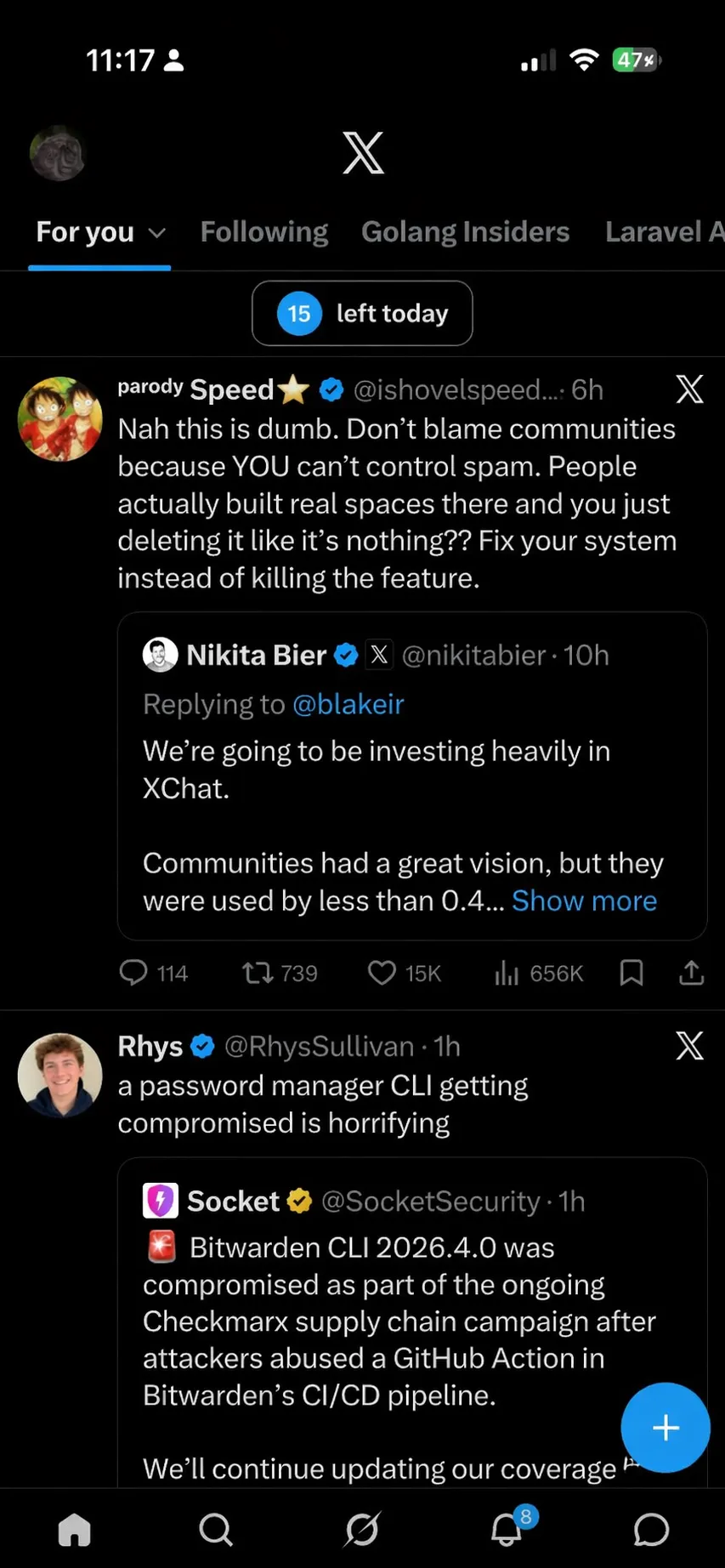
I think these services should have timeouts. Where for 15, 30, or 45 minutes a day you can scroll to your heart’s content, but once the timer runs out, you’re done until the window recharges. Obviously, I wouldn’t force this on anyone, but making it be a part of the signup flow where you have to see that its an option and can set it up would go a long way towards letting users express their autonomy and set boundaries for themselves or their children.
Realistically, I know this will never happen. We have all the tools to protect kids online today, but parents don’t have the education. The government is trying to use our fear for our children’s innocence as a wedge to pass Age Verification legislation (Digital ID by any other name), and Palantir wants to overthrow civil society and bring about the cyber-apocalypse.
I am disappointed in ChatGPT’s new image generation model. I used it from their web interface to generate that UI above and it did okay, all things considered.
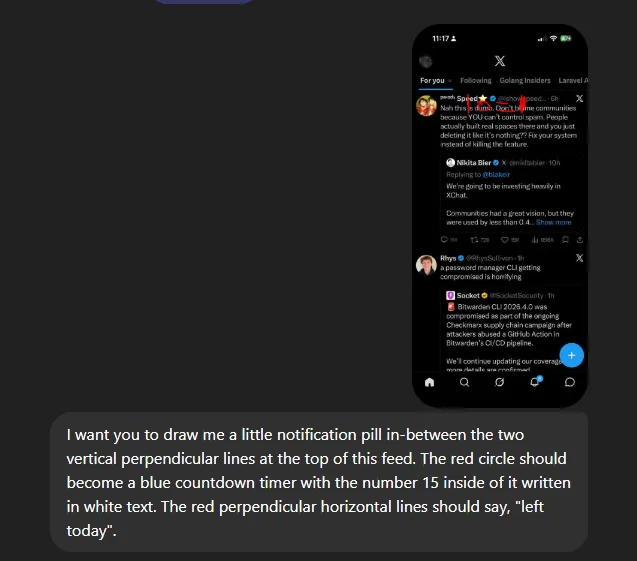
It did a great job literally generating what I described, but the implicit design knowledge a real designer has is missing. I think these models remain great for prototyping, but to do real design work you’re going to need to download some “skills”.
Either way, what are your thoughts on the timeout idea? How would you use it?